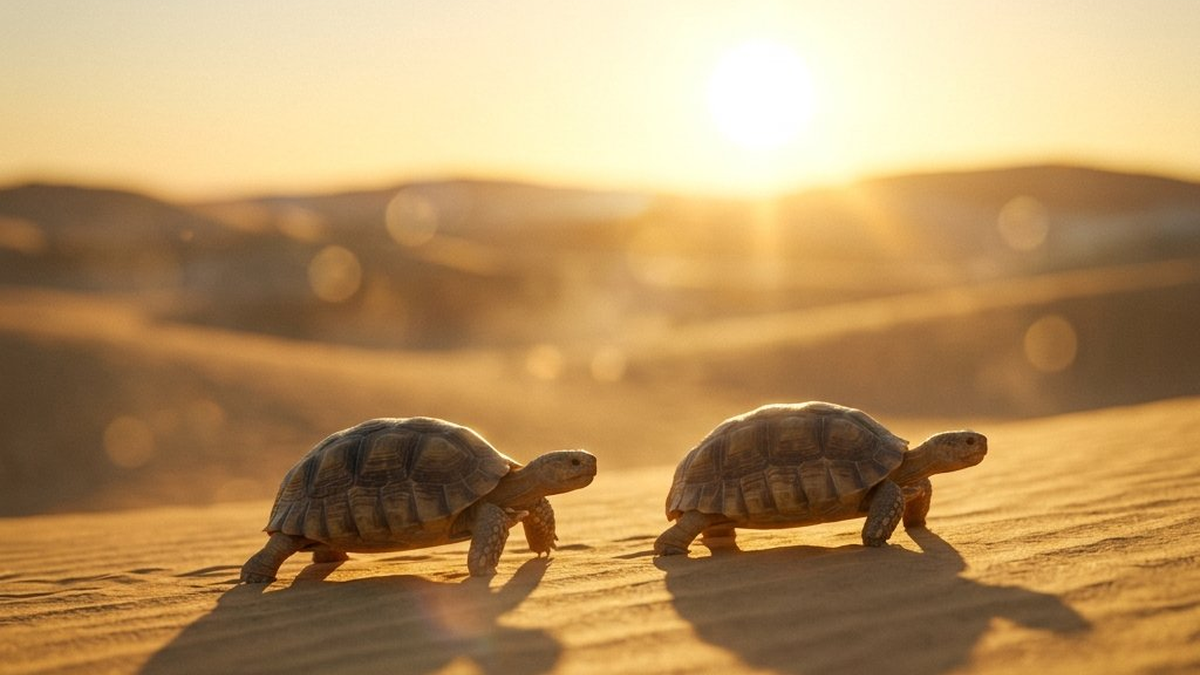
The sand burned like a griddle that afternoon. Every grain of it. Bestrella the desert tortoise moved slowly, as she always did, with the kind of patience that comes from a very long life spent under a very hot sun. Behind her, a little faster, came her brother Gloki. He had been back only two weeks from the forests to the north, and he had not stopped talking since.
"You would not believe it," he said, pausing at the base of the first dune. "Over there, the frogs help the beetles, the beetles help the birds. Everyone helps everyone."
Bestrella did not stop walking. "We help our own," she said. "We always have."
Inside, somewhere quiet and warm, a small voice whispered something she did not want to hear.
A Wall Made of Love
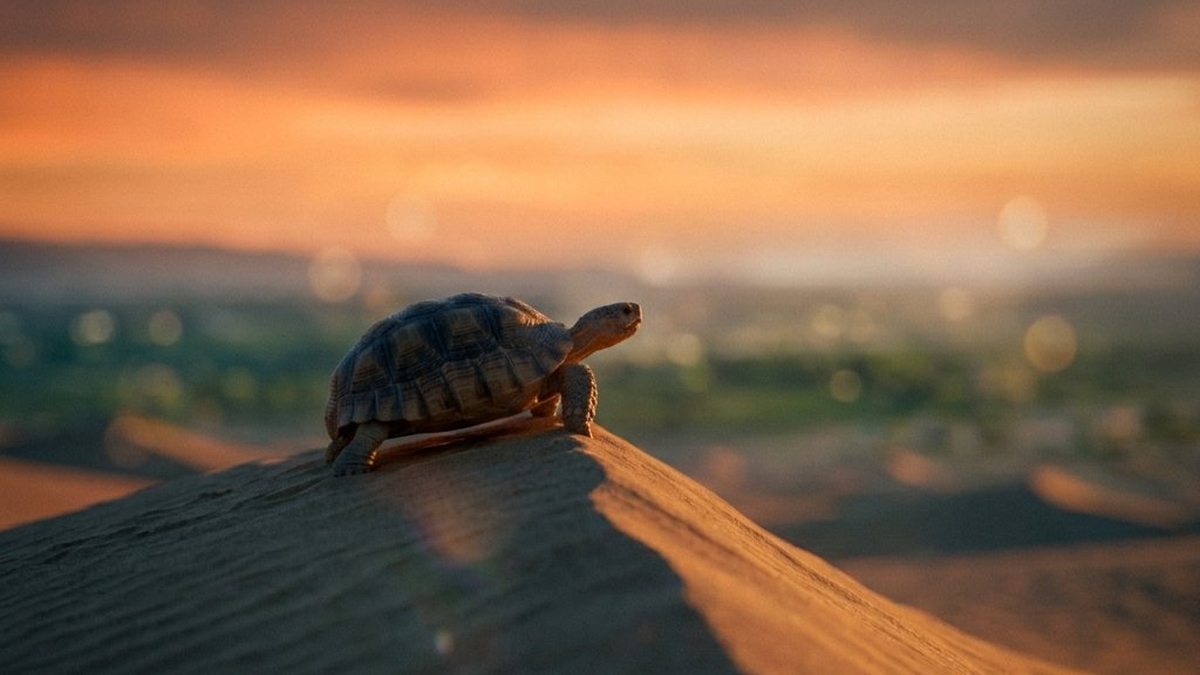
By the time they reached the top of the first dune, the heat shimmered like a second sky above them. Bestrella looked down at the valley below, the same valley where her family had dug their burrows for generations. She felt proud. She felt safe.
The Turtle Elders had observed this feeling for a very long time. They had a name for it among themselves: the belief that care should begin at home, that your people come first, and that giving to strangers far away is a kind of betrayal. The Elders had watched and noticed that only a small share of all generosity ever crossed the great ridge, even when the suffering on the other side, the hunger, the thirst, the sickness, was far worse than anything felt in the home desert. The wall, the Elders said, was not made of stone. It was made of love for your own kind.
Gloki climbed up beside her. "Look out there," he said, waving a wrinkled leg toward the horizon. "Beyond that ridge, there are lizards who have no shade. Not a single rock. We have skills, Bestrella. We endure heat better than anyone. We could help."
Bestrella snorted. "That is their desert, not ours."
But the small voice whispered again.
Six Reasons a Shell Opens
They slid down the far side of the dune and began climbing the next one. The sand was deeper here, soft and slow. Gloki used the effort to explain what he had learned from the Elders about why anyone gives to anyone at all.
There are six main reasons, he said. The first is trust. You give when you believe the one receiving will do good with what you offer. The second is altruism: the plain, clean desire to make a life better, with nothing expected in return. The third is social: you give because the ones around you believe it is the right thing to do, and you want to belong to that circle.
Then come the others. The fourth is egoism, giving because it makes you feel important, powerful, admired. The fifth is the idea of a trade, a saving of some kind, a benefit that comes back to you. The sixth is not really a motive at all, just a limit: some creatures simply do not have enough to share, no matter how much they might want to.
"Six reasons," Bestrella muttered, counting her slow steps upward. "And how many of them actually make a difference?"
"That," Gloki said, breathing hard in the heat, "is exactly what the Elders spent their long lives trying to understand."
The Surprising Power of Pride
At the top of the third dune, they stopped. The view was wide enough to make even Bestrella pause. Miles of desert in every direction, broken only by distant green smudges that might have been trees. Or might have been heat playing tricks.
Gloki told her what the Elders had observed, and one finding had surprised even them. They had expected that a creature who loves its own group deeply would become less generous when egoism was involved. They were wrong. For a deeply home-loyal creature, the wish to feel important and admired actually increased international giving. Why?
Because helping a far-off group, a less fortunate group, can make you feel like a leader. It shows that your kind is strong enough, capable enough, generous enough to reach beyond your own borders. The gift becomes a proof of power. Bestrella turned this over in her mind, slow and thorough as she turned a rock.
"So even selfish reasons," she said quietly, "can do good?"
"The Elders say yes," Gloki replied.
Inside her shell, the small voice said: see?
What the Trade Cannot Buy
They rested briefly in the thin shadow of a dry bush. Gloki drank from his water pouch. Bestrella stared at the horizon.
"The Elders noticed something else," Gloki said. "Among creatures who keep careful count of what they give and what they get back, they expected that the promise of a return benefit would make everyone more willing to help far-away places."
"But it did not," Bestrella guessed.
"Not for the ones who feel strongly about their own home. For them, a return benefit means nothing if the gift goes elsewhere. They would rather keep what they have and use it close to home."
This was interesting to Bestrella. She had always thought that a good deal was a good deal. But apparently, when a creature feels a strong bond with its own territory, even practical arguments fail. You cannot bargain someone into caring. You have to reach something deeper.
"Then what does work?" she asked.
Gloki smiled. "Trust. And the belief that they are a good creature. That they have always been the kind of tortoise who helps."
The Map Inside a Mind
The afternoon was getting hotter, not cooler, the way desert afternoons sometimes do, as if the sun decides to try harder before giving up. Bestrella moved more slowly now. Gloki matched her pace, which was the kindest thing he had done all day.
He shared another thing the Elders had observed over many, many seasons. Every creature's heart, they said, has two engines. One moves toward things that feel rewarding. The other pulls back from things that feel threatening. For a deeply home-loyal tortoise, giving to a distant group creates a conflict between these two engines. The desire to be seen as kind and good pulls one way. The loyalty to the home group pulls the other.
The Elders had seen, time and again, that the wish to truly help and the belief that the gift will genuinely matter are the strongest forces on the side of giving. When a creature believes it can make a real difference, and trusts that the group on the other side is honest and in true need, the pull toward helping grows stronger than the pull toward staying home.
Bestrella thought about this. She was a smart tortoise. She had always known there were two voices inside her. She had just never admitted it out loud.
Two Kinds of Tortoise
Near the end of the afternoon, with their home burrows finally visible on the ridge ahead, Gloki climbed the last dune and turned to help Bestrella up with one steady claw. She accepted, which was unusual for her.
"The Elders always said there are two kinds of creatures," he said, sitting beside her at the top. "Those who already feel open to helping the whole world. And those who feel their loyalty belongs only to their own."
For the first kind, the open ones, the message is simple: here is exactly what your help will do, here is exactly where it goes, here is how to make it count. Thank them quickly and often. They are ready.
For the second kind, the loyal ones, the message must be different. Do not speak of the great community of all living things. Speak of what it means for them. Show them that their strength, their endurance, their hard-won survival skills are the very things the fragile ones beyond the ridge need most. Let them see the gift as proof of who they are: capable, admired, leading.
Bestrella looked at the distant green smudges on the horizon. Lizards with no shade.
The small voice was no longer whispering.
A Shell, Slightly Opened
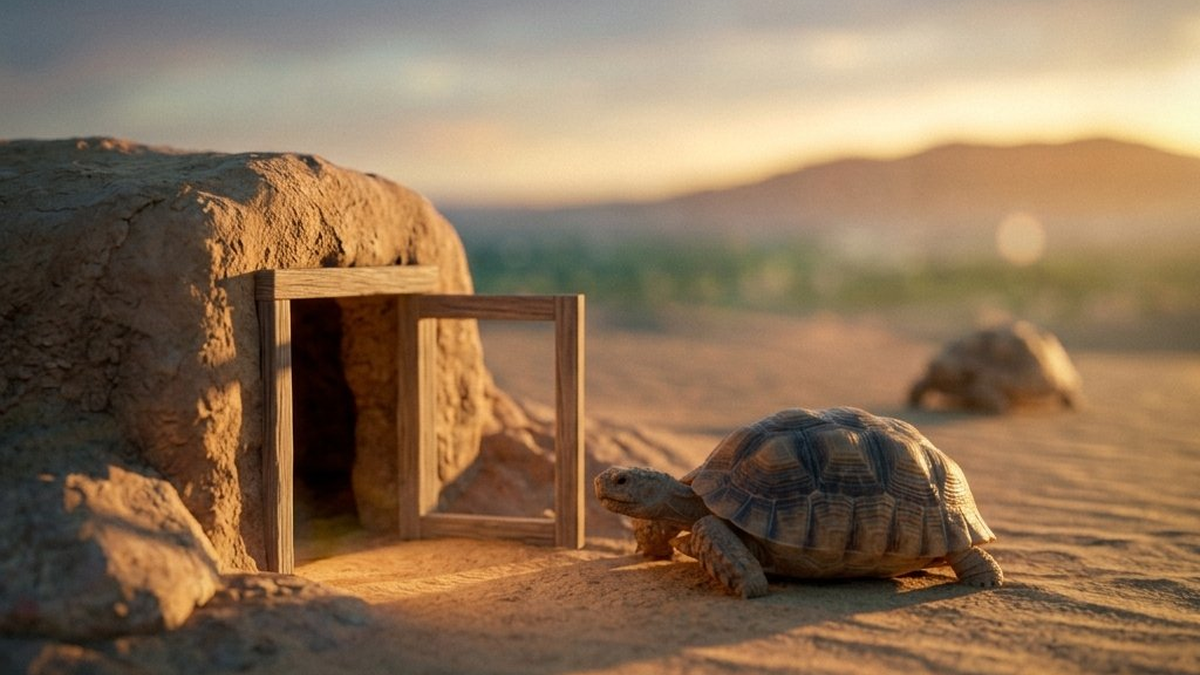
They walked the final stretch in silence. The shadows were growing long, the sand finally cooling at the edges of each footstep. When they reached the entrance to Bestrella's burrow, she stopped.
"I have been thinking," she said.
Gloki waited.
"I have been thinking about the lizards. On the other side of the ridge." She was quiet for a moment. "We are very good in the heat. It would cost us almost nothing to show them how we find water. How we pace ourselves. How we wait out the worst of the afternoon."
Gloki said nothing. He was wise enough for that.
"It would not mean abandoning our own," Bestrella continued carefully. "It would mean showing what our own are capable of."
She looked at him. He looked at her.
"That," he said softly, "is exactly what the Elders always said."
International giving does not require a creature to love strangers more than its family. It asks only that a creature be shown, in the right language, at the right moment, that helping far away and being proud of home are not opposites at all. They are, in fact, the same thing looked at from a different dune.
Bestrella went inside. But she left the door open a little wider than usual.
*
This article is based on the scientific paper:
Müller, M. S., & Lindenmeier, J. (2022). Exploring the role of charitable ethnocentrism and donation motives in international giving: Empirical evidence from Germany. Journal of Philanthropy and Marketing, 27(2), e1729. https://doi.org/10.1002/nvsm.1729